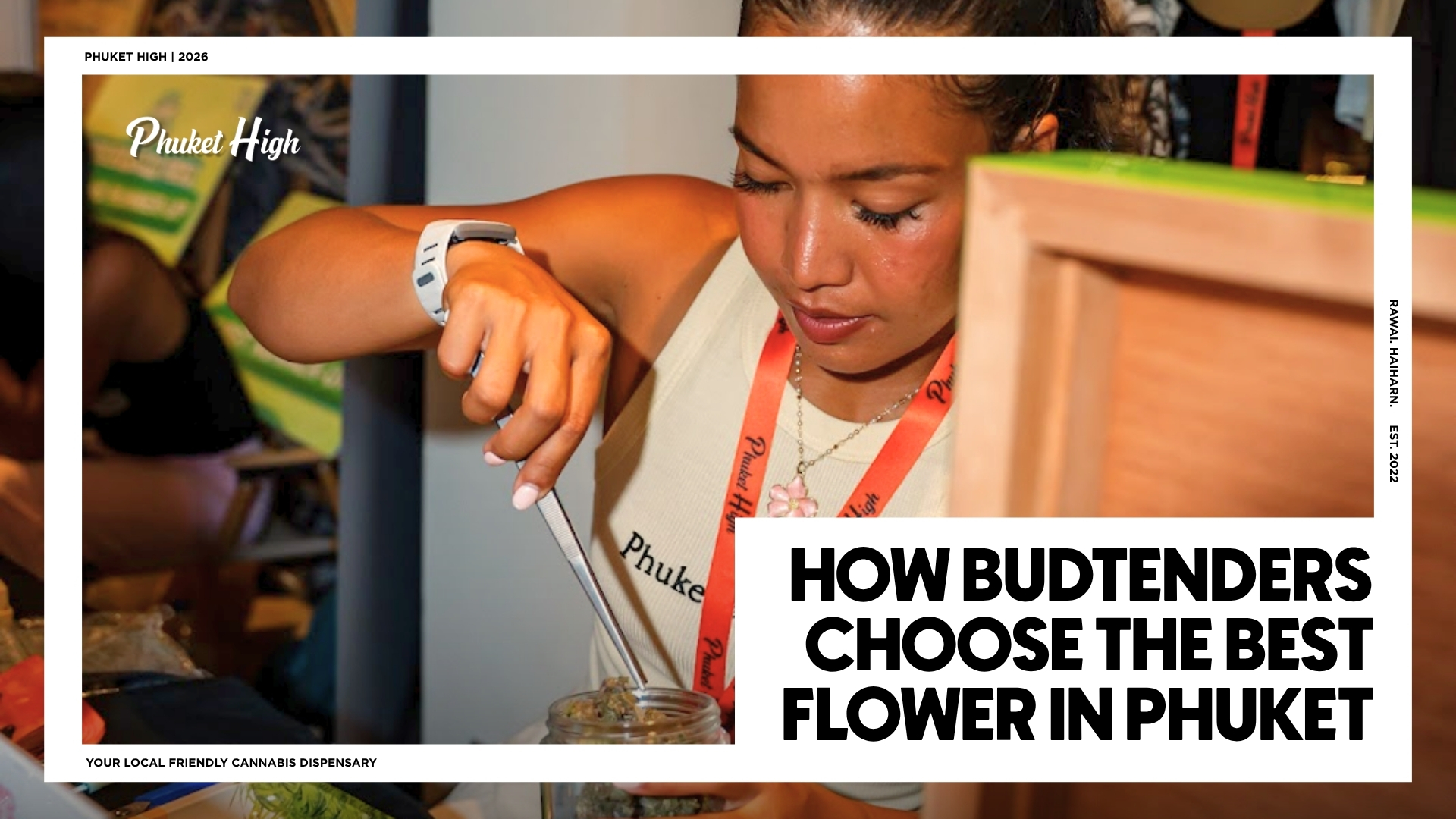
Most people think a budtender’s job starts when you walk through the door. It does not. By the time you are standing at the counter pointing at a jar, somebody has already made about fifteen decisions on your behalf, and every one of them happened weeks earlier.
They chose which farms to buy from. They smelled sixty samples and said no to fifty of them. They argued about price. They decided which batch goes on the top shelf and which one quietly becomes the house special. They rejected a delivery that looked perfectly fine to everyone else in the room.
That filtering is the actual product. The flower in the jar is just the result.
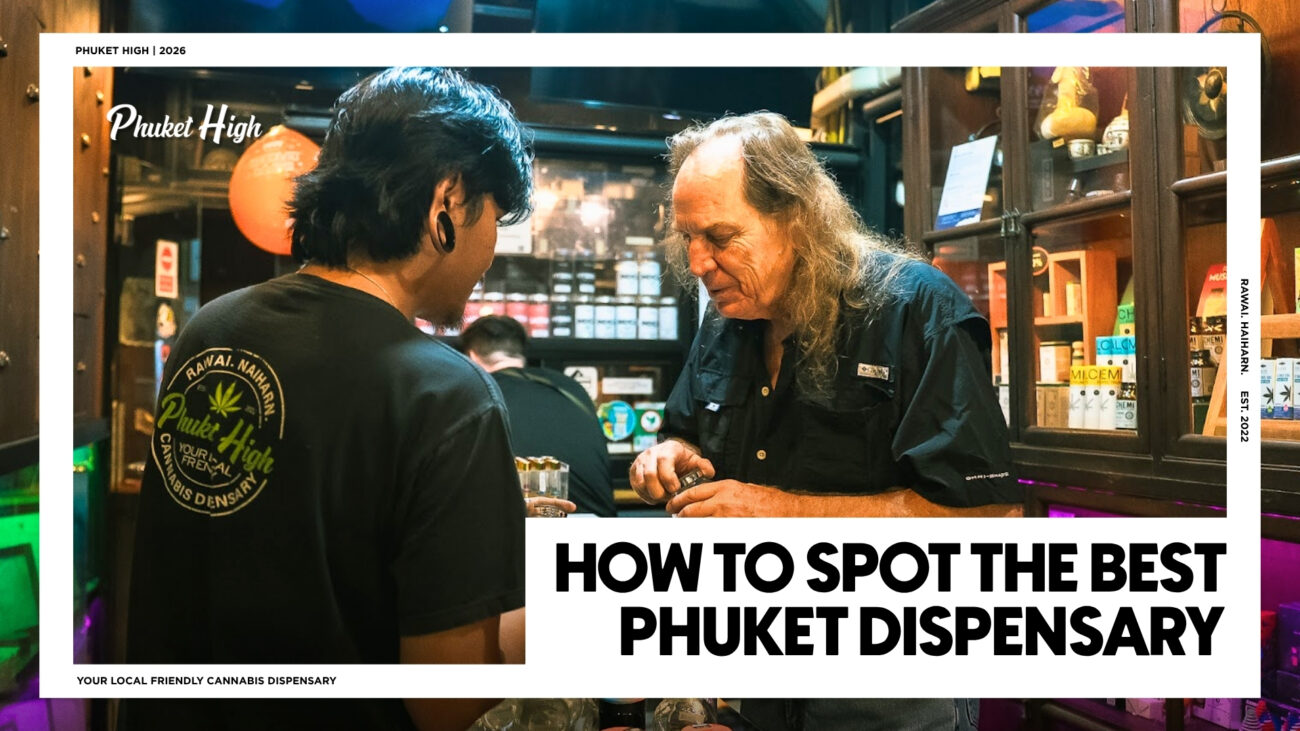
So here is what happens on the other side of a Phuket dispensary counter, from farm sample to your bag, and how they decide what counts as the Best Weed in Phuket.
The Job Is Not What You Think
Ask most visitors what a budtender does and you will hear something about recommending strains. That is maybe twenty percent of it.
The rest is buying, grading, storing and rejecting weed in Phuket. A good one is part sommelier, part warehouse manager, part translator. They spend more time with a hygrometer and a set of scales than they do talking about indica and sativa.
The buying side is where the real skill sits. Anybody can learn to describe a strain. Very few people can smell four samples of the same cultivar from four different growers and correctly pick which one will still taste good in six weeks.
That is the skill you are paying for at a well run Phuket dispensary, even though nobody ever puts it on a menu. You are not just buying flower. You are buying somebody else’s judgement, exercised weeks before you arrived. That judgement is what separates the best weed in Phuket from everything else on the street.
What Happens Before a Jar Reaches the Shelf
The process usually starts with samples. Farms and suppliers send small amounts, sometimes a few grams, sometimes a whole jar.
Those samples get opened, smelled, squeezed, photographed and often smoked. Notes get taken. Prices get discussed. Most of it goes nowhere.
The hit rate is brutally low. Talk to buyers at any serious Phuket dispensary and they will tell you they say no far more than they say yes. Out of a big batch of samples, a handful make the cut, and only one or two land on the top shelf.
Then comes the negotiation, which is where a lot of quality decisions actually get made. A grower with excellent flower and a fair price gets a repeat order. A grower with excellent flower and a silly price gets a polite no. A grower who was great last season and sloppy this season gets a difficult phone call.
None of this is glamorous. It is closer to produce buying than anything else, and a fishmonger choosing what to put on ice would recognise the whole routine.
Why Smell Comes First When Judging the Best Weed in Phuket
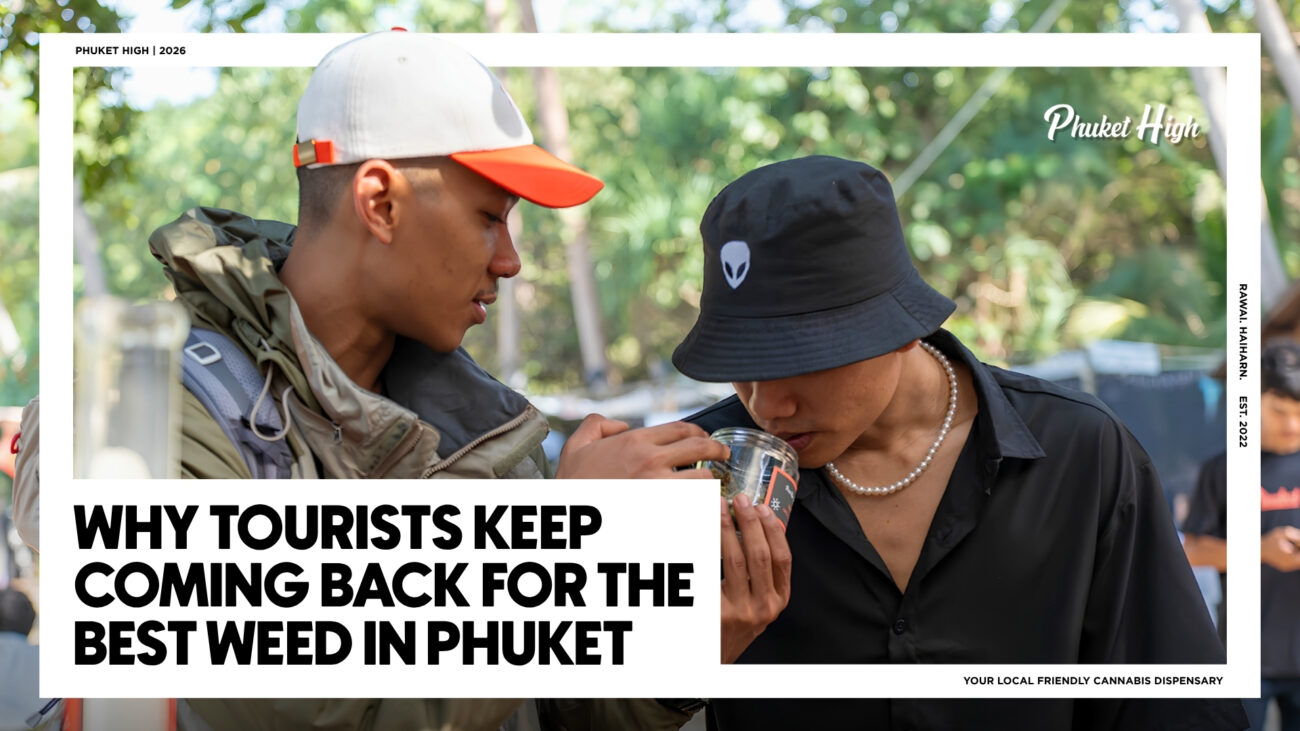
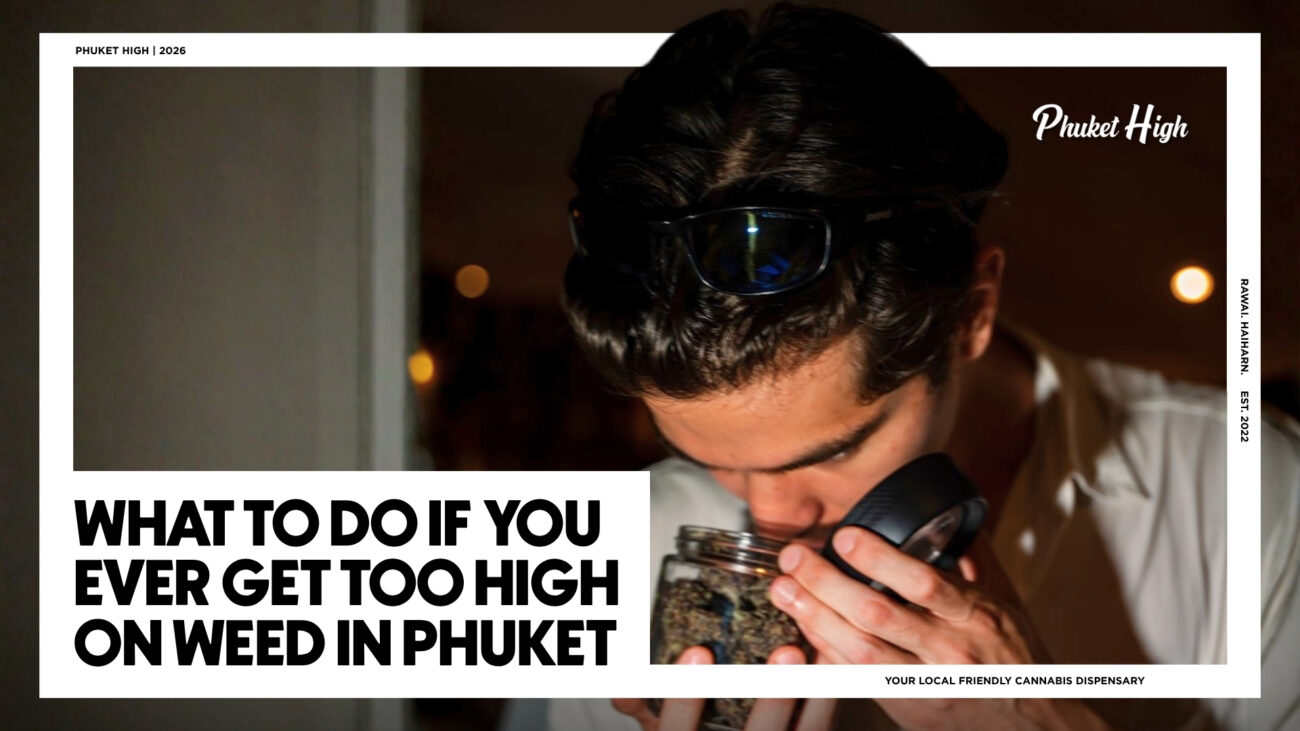
Every buyer on this island leads with their nose, and there is real science behind the habit.
Aroma comes from terpenes, and terpenes are fragile. Research on terpene stability shows that light and heat strip those compounds fast, with high temperatures wiping out the large majority of terpene content. So a loud, specific smell is not just pleasant. It is evidence that the flower was dried carefully, cured properly and stored somewhere sensible.
That makes smell the most efficient quality test available. It tells you about the grow, the dry, the cure and the handling all at once, in about two seconds.
What buyers want is intensity plus clarity. Fuel, citrus, sour fruit, pepper, something that arrives sharply and holds. What they reject is vague sweetness, wet grass, hay, or the flat nothing of flower that has already given up.
Ask a budtender to describe the best weed in Phuket they have smelled this year and they will not mention a number on a label. They will describe a smell.
The Squeeze Test and the Moisture Call
After the nose comes touch, and this is where a lot of batches quietly fail.
Buyers want flower that gives slightly and springs back. Too crisp and it has been over dried, which means the aroma has already left and it will burn hot and taste of paper. Too soft and it is holding water, which is both a mould risk and a way of selling air as weight.
The target most of the industry works toward sits between 58 and 62 percent relative humidity. On this island, where outdoor air sits far above that for most of the year, holding that band takes equipment and attention.
So the moisture call is really a question about the seller. Flower that arrives at the right moisture usually came from somebody with a proper dry room and sealed packaging. Flower that arrives spongy came from somebody who rushed. Neither problem can be fixed once flower has left the farm, which is exactly why the call gets made at the door.
Experienced staff at a Phuket dispensary make this call in a second, and they often make it before they even discuss price.
What Gets a Batch Sent Back
Rejection is the least visible part of the job and the most important one.
Visible mould ends a conversation immediately. So does any ammonia smell, which usually means moisture and bacteria got to work somewhere between harvest and delivery. Nobody negotiates on that.
Beyond the obvious, batches get turned away for being seedy, for heavy machine trim damage, for arriving in bags rather than sealed containers, and for simply not matching the sample that won the order in the first place. That last one happens more than people expect, and it permanently damages a supplier relationship.
Age gets weed in Phuket rejected too. Flower harvested three months ago and stored badly is not worth shelf space at any price, because customers will smell the difference and blame the shop rather than the farm.
The willingness to eat a loss and send something back is the clearest sign of a Phuket dispensary that intends to be around in five years.
How a Phuket Dispensary Picks Its Farms
Individual batches matter less than the relationship behind them, so the farm decision is the biggest one a buyer makes.
Thai regulation pushes in the same direction. Growers and sellers work under GACP certification overseen by DTAM, and downstream licences depend on sourcing from certified operations. That paperwork is a floor rather than a quality guarantee, but it narrows the field.
Past that floor, buyers look for consistency across seasons. A farm that produced beautiful flower in January and mediocre flower in September is not necessarily careless. It might just lack a climate controlled dry room. Either way, a shop needs to know which it is.
They also look at communication. Growers who flag a problem before delivery get kept. Growers who hope nobody notices get dropped.
The best supply arrangements here are old friendships with clear standards, which is why the shops holding the best weed in Phuket tend to have been buying from the same few people for years.
What Top Shelf Really Means Behind the Counter
Top shelf is not a marketing word inside the building. It is a grade, and it has criteria.
To earn it, flower usually needs a loud nose, hand trim quality, correct moisture, dense but not soggy structure, and a recent arrival date. Miss one of those and it drops a tier, no matter what the strain is called or what the grower wanted for it.
Price alone never buys the label. Plenty of expensive imported flower arrives tired from travel and lands mid shelf. Plenty of local flower from a small grower earns the top spot for a fortnight and then gets moved down as it ages.
That last point catches customers out. A jar can be top shelf in week one and honestly mid shelf by week four. A Phuket dispensary that quietly re grades stock as it ages is being straight with you. One that never moves anything down is not grading at all.
Ask when the jar arrived and you learn more about its true grade than the label will ever tell you.
How Staff Grade Weed in Phuket Into Tiers
Most Phuket dispensary menus run three tiers, and the logic behind them is simpler than it looks.
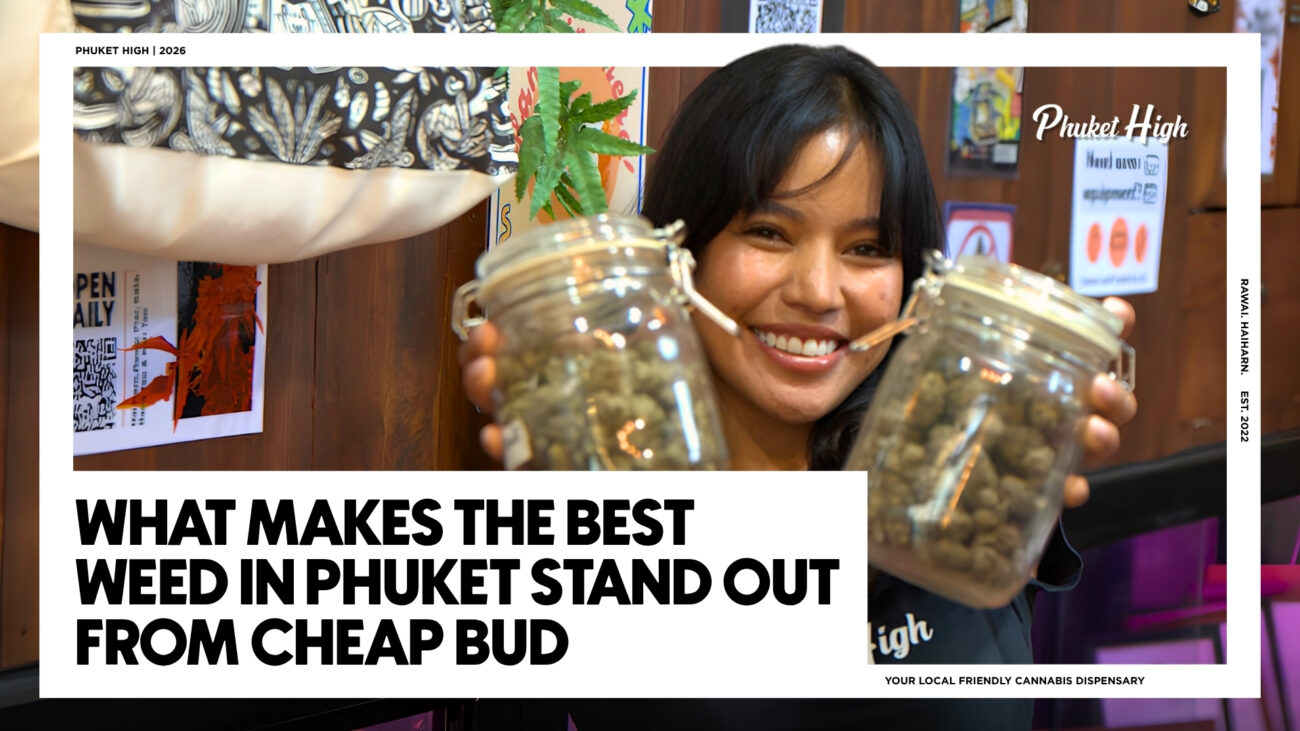
The bottom tier is for volume. It smells decent, burns clean and does the job for somebody smoking every day who does not want to spend much. Nobody is pretending it is special.
The middle tier is where most of the skill lives. This is flower that is genuinely good and priced so people can afford it regularly. Buyers spend most of their attention here, because it is what the majority of customers take home, and getting it right is what earns repeat visits.
The top tier is small on purpose. It exists to show what the shop can source and to give enthusiasts something to get excited about. Holding too much of it is a mistake, because it ages on the shelf while everyone buys the middle.
Good staff will happily tell you when the middle tier is outperforming the top one that week. That honesty is a better signal of quality weed in Phuket than any price list.
Reading a Customer in Thirty Seconds
Now the part you actually see. Behind the friendly hello, a decent budtender is gathering information fast.
They are listening for tolerance. Somebody who says they smoke occasionally at home gets steered away from the thirty percent shelf, no matter what they ask for. They are listening for plans, because flower that suits a hammock is wrong for a boat trip. They are listening for anxiety, sleep problems, or a mention of pain, all of which change the recommendation completely.
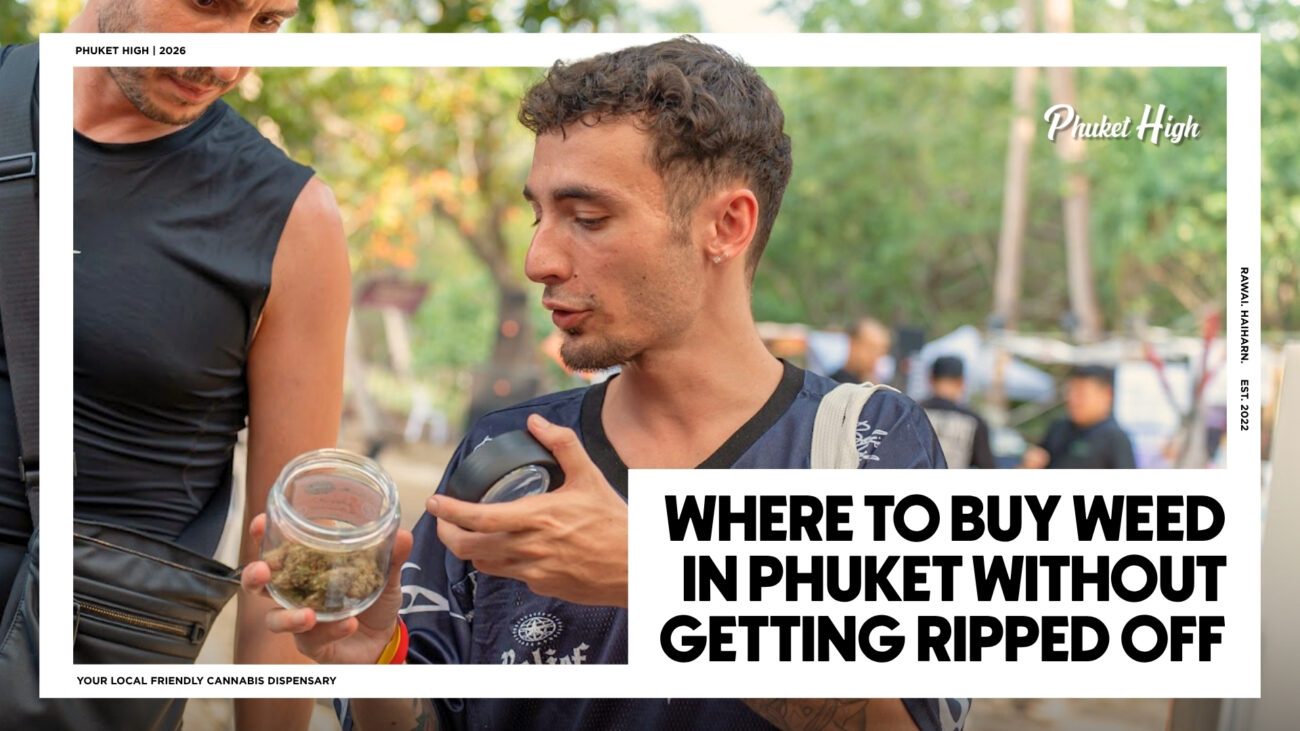
They are also watching. Confidence with a grinder, the way somebody smells a jar, the questions they ask. It all narrows the field.
The reason this matters is simple. A shop that sells you the wrong thing loses you, and on an island with hundreds of options, losing customers is fatal. So the incentives at any Phuket dispensary that plans to survive point toward getting it right rather than getting the biggest sale.
Bad staff sell what needs shifting. Good staff sell what fits, because matching somebody to the best weed in Phuket for them is a different job from moving the most expensive jar.
Why Good Staff Talk People Out of High THC
Nothing marks out a serious shop faster than a budtender arguing against a purchase.
Percentages are the most misleading number in the room. A high figure tells you almost nothing about how flower will feel, because effect comes from the whole chemical profile rather than one line on a label. Plenty of flower in the low twenties feels stronger and better than something testing near thirty.
Experienced staff know this because they have watched hundreds of customers react. They have also seen the other outcome, which is a nervous first timer who took the strongest thing available and spent the evening lying down.
So they redirect. They ask what you want to feel rather than what you want to buy. They suggest something gentler and offer to sell you more of it.
That is why the people finding the best weed in Phuket for their customers rarely lead with numbers. Numbers are for shops that do not know what is in their jars.
What Budtenders Actually Smoke Themselves
Here is a question worth asking, because the answer is revealing.
Staff picks are almost never the most expensive thing in a Phuket dispensary. They are usually mid shelf, freshly arrived, and chosen for flavour rather than force. People who smoke every day for work develop tolerance, and they get tired of heavy flower very quickly.
They also tend to favour whatever came in that week. Freshness beats prestige when you have smelled enough jars to know what seven days on a shelf does to aroma.
If you ask what somebody is personally smoking and they name something specific, with a reason, you are talking to a real budtender. If they name the priciest jar in the room, you are talking to a salesperson.
Following the staff pick is the easiest shortcut to good weed in Phuket available to a visitor, and it costs nothing to ask.
The Medical Cannabis Phuket Side of the Job
Since the medical cannabis Phuket rules changed, this has become a much bigger part of the day.
Flower now requires a prescription, so staff handle paperwork alongside product. That means logging sales correctly, keeping records, and knowing exactly what they can and cannot sell to whom. A medical cannabis Phuket customer walking in with a genuine condition needs a different conversation from a curious tourist, and good staff switch modes immediately.
It also changes how they buy. Patients need consistency far more than novelty, because a strain that works for pain or sleep has to feel the same next month. So a Phuket dispensary serving medical cannabis Phuket regulars keeps a stable core of indoor grown flower that holds its profile through the seasons, alongside the rotating stock everyone else browses.
The staff who are good at the medical cannabis Phuket side ask about goals before they name a strain, and they will tell you honestly when this month’s batch is different from the last one. That kind of care is unglamorous and genuinely valuable.
Where to Buy Weed Phuket Staff Send Their Own Friends
Ask a budtender on their day off where to buy weed Phuket residents actually rate, and you get a very unsentimental answer.
They name shops with proper storage, because they know what humidity does. They name shops with fast turnover, because they know what a month on a shelf costs. They name shops where the staff have been there for years, because that means somebody is being trained properly.
They almost never name the biggest sign on the busiest street.
That instinct is worth borrowing. Anyone working out where to buy weed Phuket has to offer should be looking at the boring operational things rather than the branding, because that is exactly what the professionals look at when they are spending their own money.
And if you ever get a straight answer to where to buy weed Phuket locals prefer from somebody who works in the industry, take it. That recommendation carries more weight than a hundred reviews.
The Short Version
Budtenders choose by smell first, touch second, freshness third and paperwork always. They reject far more than they buy. They care about which farm it came from and when it arrived far more than what it is called.
They grade honestly, they re grade as stock ages, and they smoke mid shelf themselves.
You can copy nearly all of it in thirty seconds at the counter. Smell two jars. Squeeze gently. Ask when it landed. Ask what the person serving you is smoking this week and why.
Do that and you are applying the same filter the professionals use, which is the whole trick behind consistently finding the best weed in Phuket.
Nobody needs an expert nose. They just need to ask the questions the experts already ask.